

Open-plan offices make sustained concentration difficult. In a 2026 UK survey, 63% of office workers said they had worked from home at least once specifically to avoid office noise. Other research suggests that returning to an interrupted task may take an average of approximately 23 minutes.
Guidance for rooms requiring concentration commonly places desirable background noise within approximately 35–45 dB. Occupied open-plan offices, however, frequently operate above this range, with conversations and other variable sounds creating additional distraction.
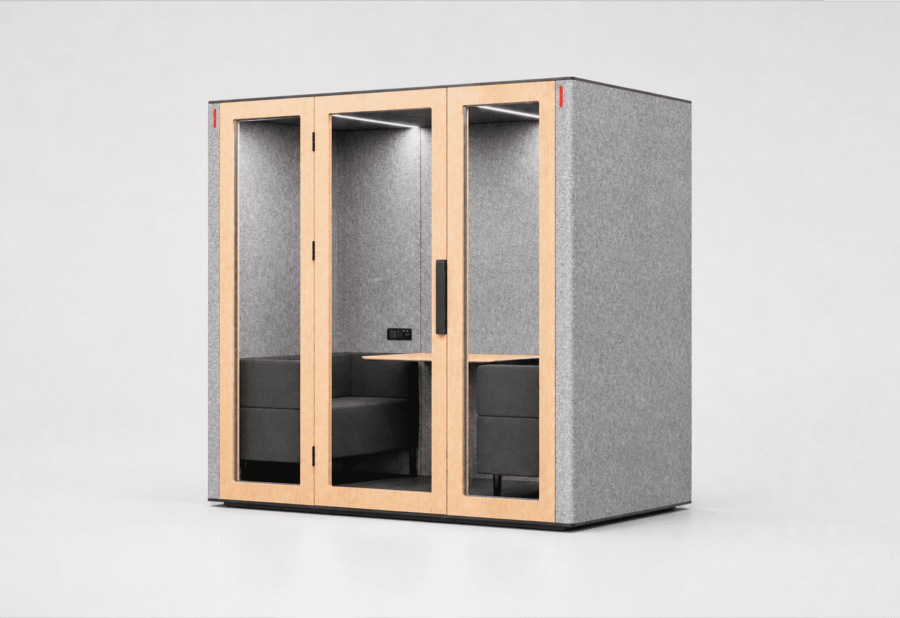
Dedicated quiet zones address the problem directly. A soundproof office phone booth provides a controlled environment for calls, focused work and negotiations without requiring the construction of a permanent meeting room.
Our WorkBooth models provide a rated noise level reduction of up to 43 dB, helping reduce interference from surrounding conversations and office activity. By creating quieter spaces for meetings and focused work, we help teams minimize distractions. Improved acoustic conditions may support productivity gains of up to 15% and allow employees to recover approximately 60–90 minutes of focused working time each day.
Why Silence Is Becoming a Standard of Corporate Culture
Businesses do not benefit from employee presence alone. They benefit from accurate decisions, productive conversations and work completed without unnecessary delays.
In a noisy environment, the brain must continually filter conversations, calls, footsteps and other background activity. Research into open-plan offices shows that intelligible speech is particularly distracting and can reduce performance on tasks involving working memory and concentration.
During negotiations, the effect becomes visible. Participants may need more time to formulate ideas, lose track of complex arguments or ask others to repeat information.
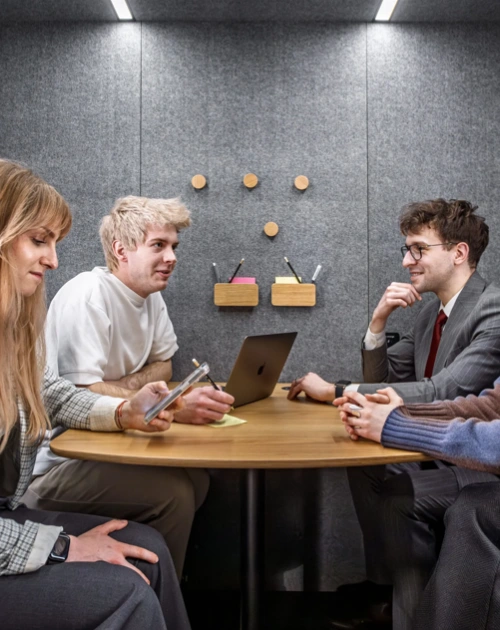
A quiet meeting space removes much of this competing sensory input. Participants can concentrate on the discussion, communicate more clearly and move toward decisions without constantly fighting background noise.
For this reason, silence is increasingly being treated as a managed workplace resource rather than a simple comfort feature.
Neurodivergent Employees: Supporting Focus Without Sensory Overload
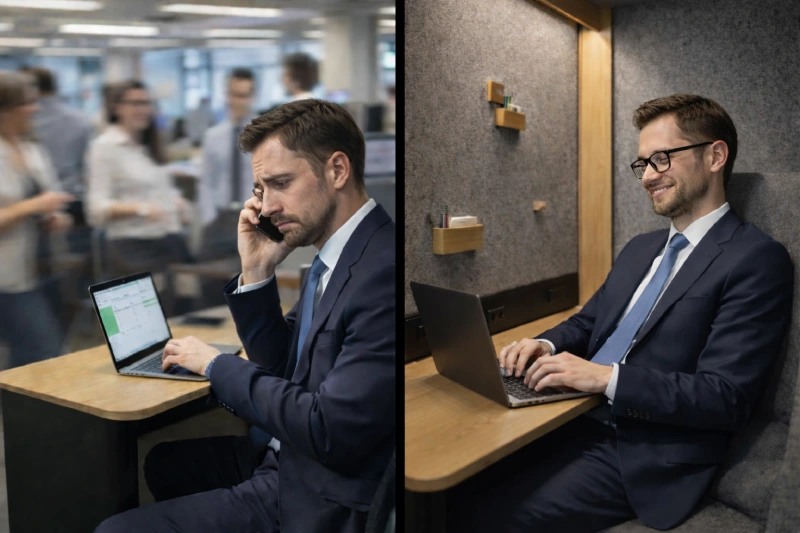
Employees with ADHD, autism or heightened sensory sensitivity may experience greater difficulty filtering background conversations, movement and changing environmental stimuli. Individual responses vary, but excessive sensory input can make sustained concentration and participation in meetings more demanding.
An isolated workspace can provide greater control over sound, lighting and airflow. A private one-person soundproof office pod creates a quieter environment for individual calls, focused tasks and video meetings.
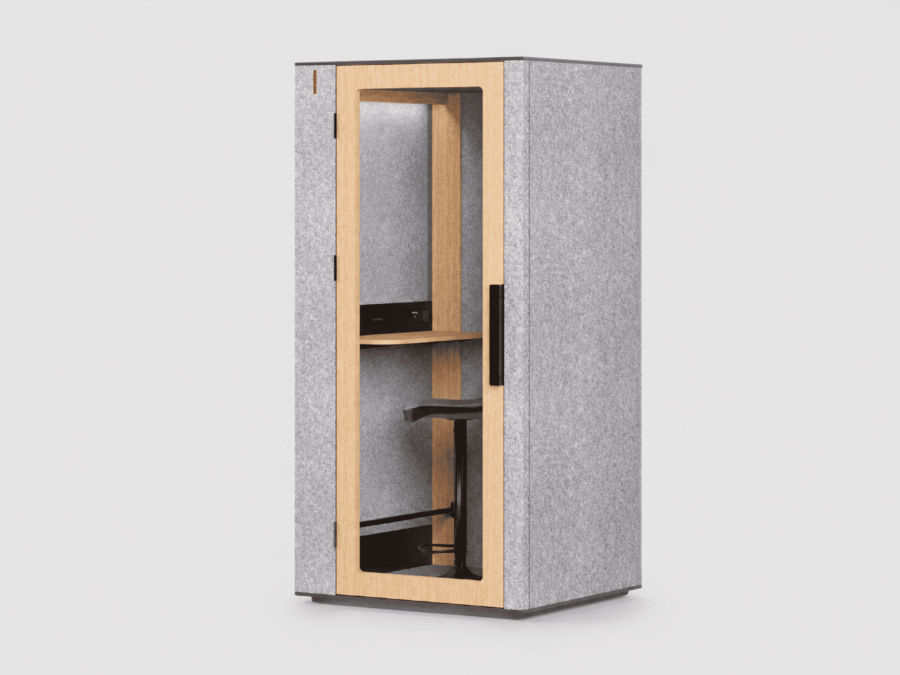
WorkBooth One combines acoustic insulation with adjustable ventilation and two lighting settings. By reducing avoidable environmental distractions, the booth can help employees maintain attention and complete a call or focused task with less sensory strain.
For employers, providing different types of work environments supports accessibility, employee comfort and more consistent performance across the team.
Silence as an Employee Benefit: Why Quiet Zones Matter to Top Talent
Experienced professionals evaluate more than compensation when considering an employer. They also look at how effectively the workplace supports concentration, privacy and communication.
Is there a suitable place to take a confidential call? Can an employee think through a complex problem without hearing several nearby conversations? Is there a professional environment for an important client meeting?
When an engineer, strategist, manager or executive must search for an empty corner before every video call, it signals that the workspace has not been designed around modern work patterns.
Quiet zones can therefore become part of a stronger employee value proposition. A well-equipped office telephone booth for calls and focused work shows candidates that concentration is treated as a business requirement rather than a personal problem.
This is not comfort for comfort’s sake. It is infrastructure that helps protect cognitive capacity throughout the working day.
Fighting Zoom Fatigue: How Acoustics and Lighting Protect Your Energy
Poor audio quality requires participants to work harder to understand each other. Background conversations interrupt attention, while echo can reduce speech clarity. Uneven lighting may also create glare or shadows that make video meetings more tiring.
These problems become more noticeable in open-plan offices, where nearby calls, movement and visual activity continue throughout the meeting.
A private office pod for video calls addresses these conditions in one controlled space. WorkBooth One provides noise level reduction of up to 43 dB, studio lighting for video calls and adjustable ventilation.
The frontal Studio lighting mode helps illuminate the face more evenly during online meetings. The Top lighting mode is designed for working with documents or a laptop.
The booth’s ventilation system circulates up to 202 m³ of air per hour and can renew the air approximately every 29 seconds while the booth is occupied. This helps maintain a more comfortable environment during longer calls and focused work sessions.
Fighting Zoom Fatigue: How Acoustics and Lighting Protect Your Energy
Serious negotiations begin with the environment. Take one or two minutes before the meeting to check the essentials.
1. Check Airflow and Lighting
Make sure the ventilation system is active and select the appropriate lighting mode.
Choose:
- Studio lighting for video calls and on-camera meetings.
- Top lighting for documents, notes and laptop-based work.
Balanced lighting helps reduce harsh shadows and provides a clearer image during online negotiations.
2. Prepare Your Devices
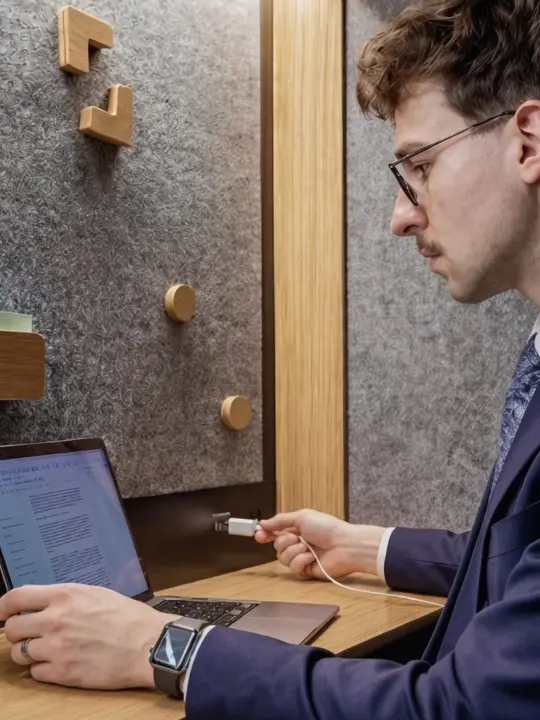
Connect your laptop and phone before the meeting begins.
Depending on the model and configuration, WorkBooth provides:
- Wireless phone charging
- USB-A charging
- USB-C charging
- Standard power outlets
Preparing devices in advance reduces the risk of interruptions during an important conversation.
3. Confirm Acoustic Isolation
Close the booth door completely before beginning the meeting. WorkBooth models provide a rated noise level reduction of up to 43 dB.
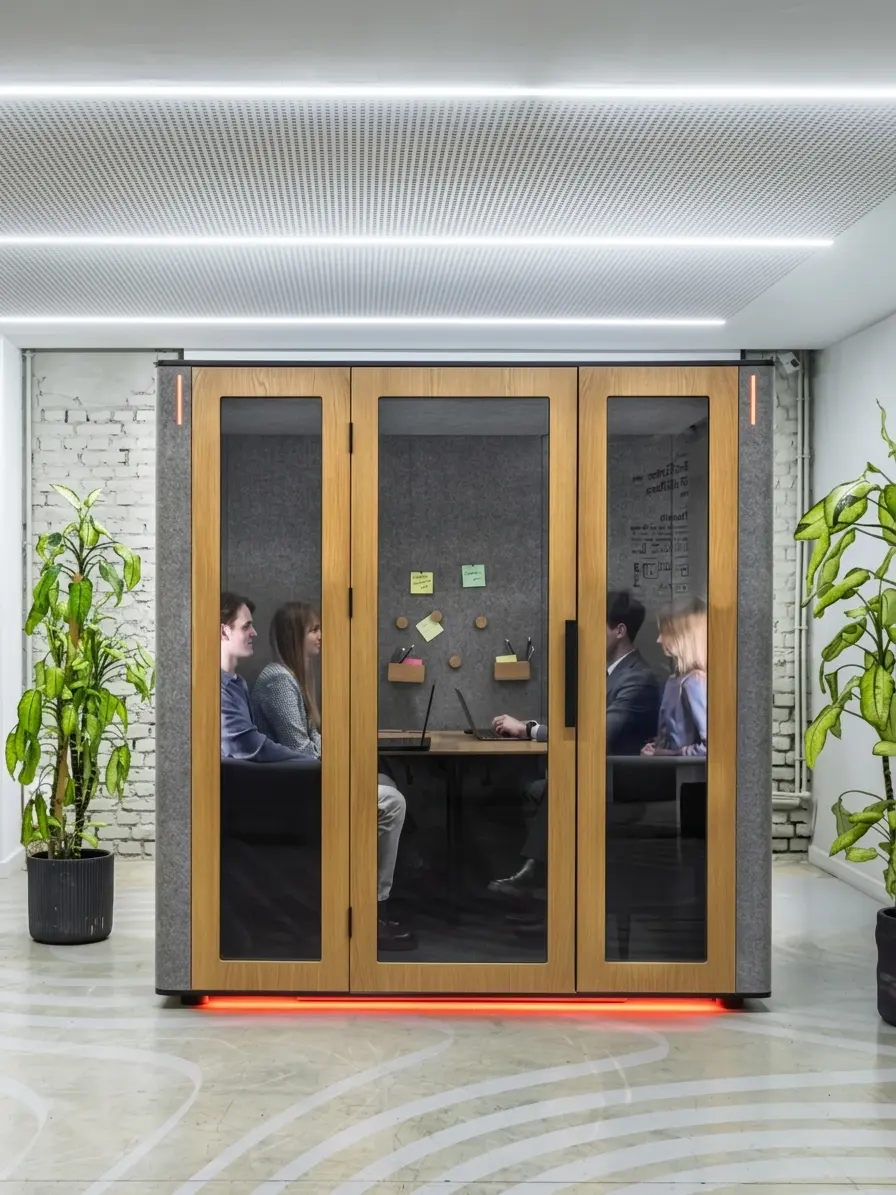
The external occupancy indicator turns red when the booth is in use, helping prevent colleagues from interrupting the meeting.
4. Remove Digital Distractions
Turn off non-essential notifications, open the required documents and review the meeting agenda.
Acoustic isolation is most effective when avoidable digital interruptions are also under control.
With the environment prepared, the booth becomes a practical tool for clearer communication, focused discussion and more efficient decision-making.
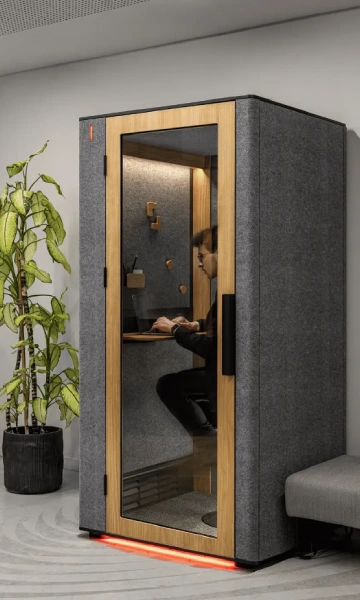
For solo calls, choose the compact WorkBooth One.
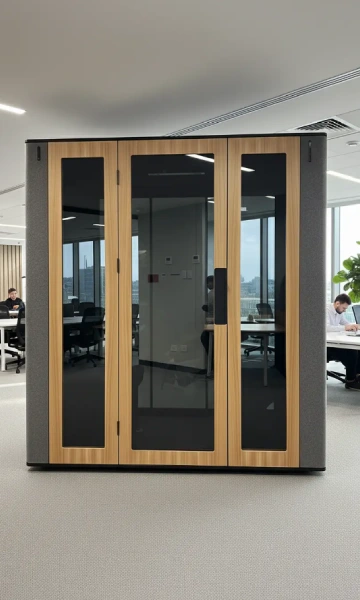
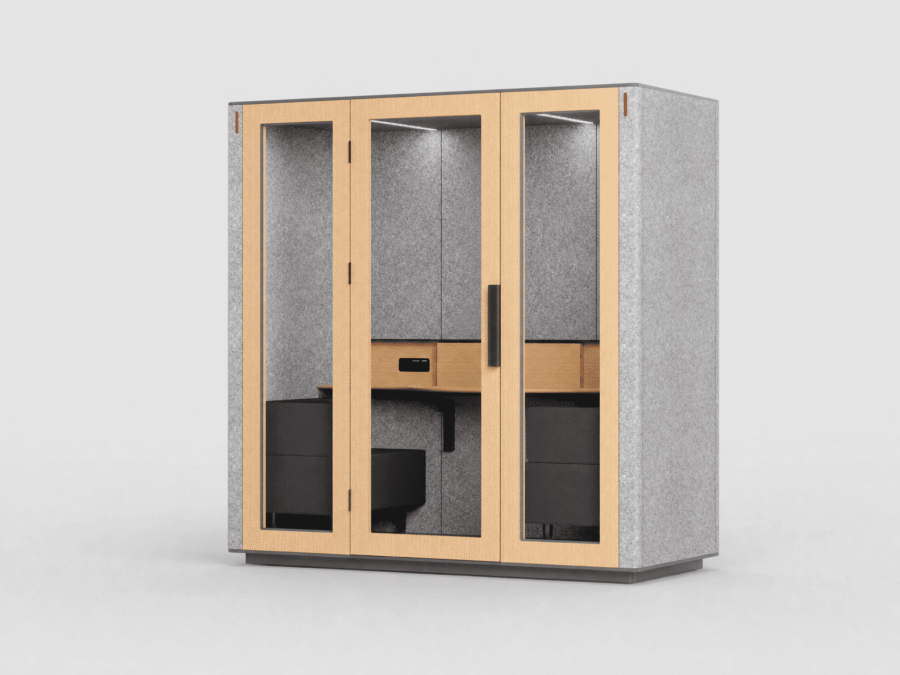
For meetings with a partner or colleague, go with a two-person meeting pod.
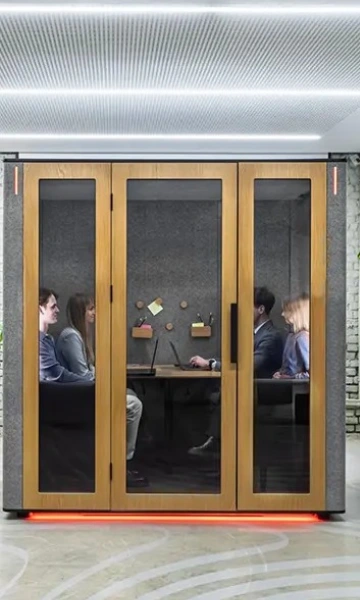
For teams of up to four people, use a 4 person office pod.